logo
제품
회사 소개
공장 여행
품질 관리
문의하기
견적 요청
소식
Beijing Jinshengxin Testing Machine Co., Ltd.
제품 소개차별 스캐닝 열량측정 기계

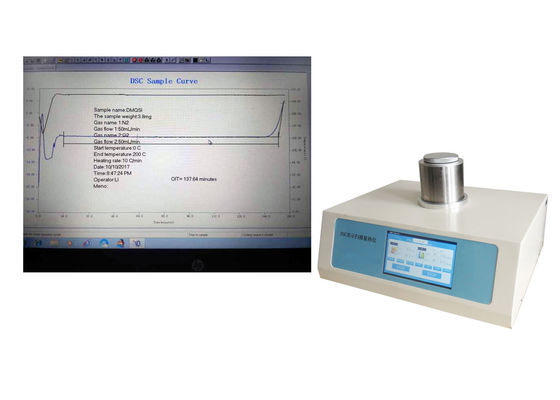
Highly Accurate Differential Scanning Calorimetry Machine for Thermal Transition Measurement

중국 Beijing Jinshengxin Testing Machine Co., Ltd. 인증
전자적 만능시험기기 제품을 위한 당신의 도움에 감사합니다

—— 가브리엘라

그것은 당신과 함께 일하는 즐거움이었고 내가 당신이 가지고 있는 노력이 우리의 회사 사이의 협력을 두었다는 것을 매우 압니다. 나는 2개 회사 사이의 제휴가 더욱 강화되기를 희망합니다. 나는 미래에 당신에게 모든 행운과 성공을 바랍니다.

—— 미스터 Si 토치기요일

제가 지금 온라인 채팅 해요

Highly Accurate Differential Scanning Calorimetry Machine for Thermal Transition Measurement

Highly Accurate Differential Scanning Calorimetry Machine for Thermal Transition Measurement

큰 이미지 :  Highly Accurate Differential Scanning Calorimetry Machine for Thermal Transition Measurement

제품 상세 정보:
원래 장소: 베이징, 중국
브랜드 이름: JINHAIHU
인증: ISO 9001
모델 번호: DSC-100A
결제 및 배송 조건:
최소 주문 수량: 1 세트
포장 세부 사항: 나무 케이스
배달 시간: 7 일
지불 조건: T/T, L/C, Western Union, MoneyGram, D/A, D/P.
공급 능력: 한 달에 30 세트
상세 제품 설명
제품 이름: 열 전이 측정을 위한 고정밀 시차 주사 열량계 기계 모델: DSC-100A
자격증: ISO, CE DSC는 이릅니다: 0~±600mW
온도 범위: 실온 ~ 600 00 공기 냉각 가열 속도: 0.1~100℃/분
온도 해상도: 0.01 ℃ 온도 변동: ± 0.01 1
강조하다:

accurate differential scanning calorimetry machine

,

thermal transition measurement machine

,

DSC machine with high precision

Highly Accurate Differential Scanning Calorimetry Machine for Thermal Transition Measurement
Instrument Overview

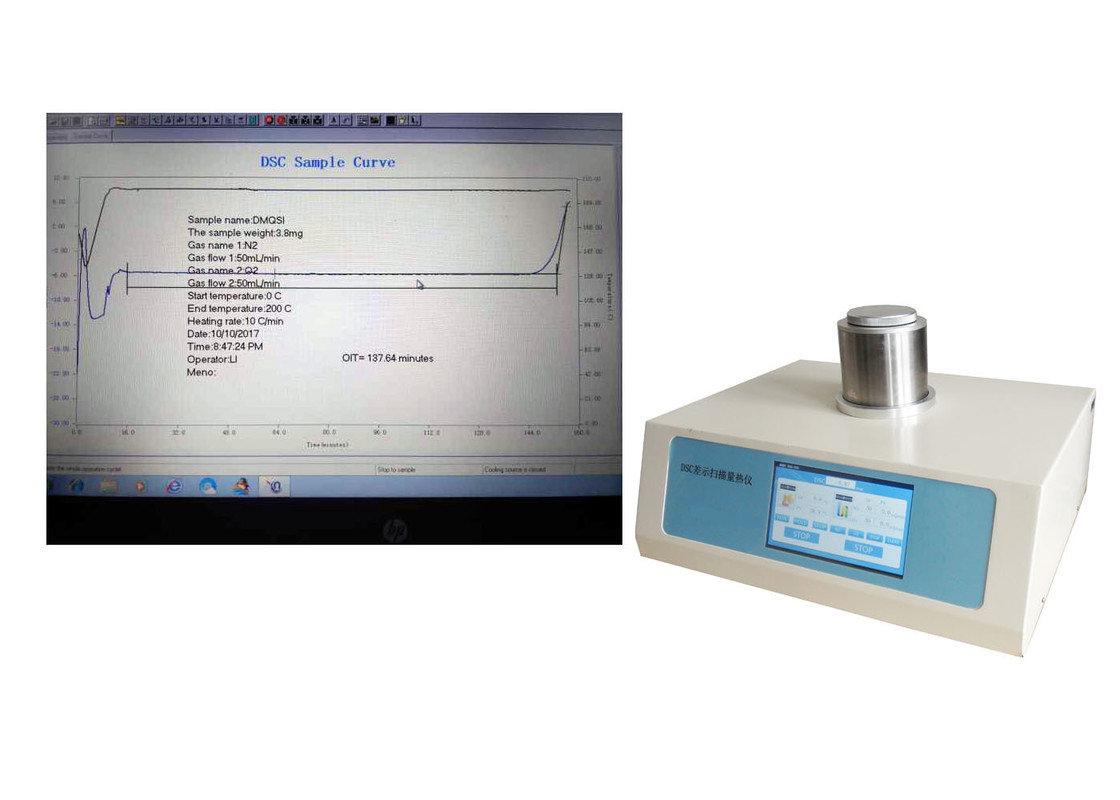
The differential scanning calorimetry (DSC) technique has been widely utilized in various industries. The differential scanning calorimeter (DSC) serves as both a routine quality inspection instrument and a professional research tool—it measures the temperature and heat flow associated with thermal transitions inside materials.

Our instrument is a heat-flow type differential scanning calorimeter, featuring excellent repeatability and high precision. It is particularly suitable for the accurate measurement of specific heat capacity. This equipment boasts easy calibration, utilizes low-melting-point calibration standards, and offers fast and reliable performance. It has an extremely broad application scope, especially in material research and development (R&D), performance testing, and quality control (QC) processes.

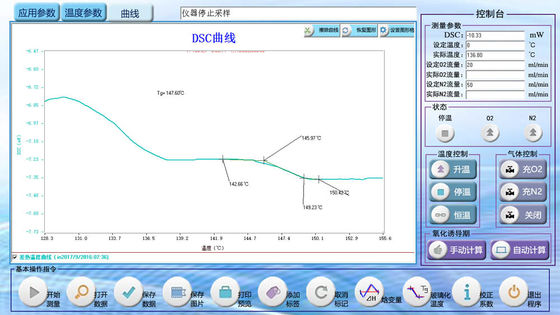
The properties of materials that can be analyzed via DSC include glass transition temperature, cold crystallization, phase transition, melting, crystallization, product stability, curing/crosslinking, oxidation induction time (OIT), etc. Different DSC models are selected based on specific experimental parameters and testing requirements to ensure optimal adaptation to diverse experimental scenarios.

Key Applications
  • Determination of curing reaction temperature and thermal effect of polymer materials
  • Determination of phase transition temperature and thermal effect of materials
  • Determination of crystallization, melting temperature and thermal effect of polymer materials
  • Determination of glass transition temperature of polymer materials
Reference Standards
  • GB / T 19466.2 - 2004 / ISO 11357-2:1999 Part 2: Determination of glass transition temperature
  • GB / T 19466.3 - 2004 / ISO 11357-3:1999 Part 3: Determination of melting and crystallization temperature and enthalpy
  • GB / T 19466.6 - 2009 / ISO 11357-3: 1999 Part 6: Determination of oxidation induction time (isothermal OIT) and oxidation induction temperature (kinetic OIT)
Technical Specifications
Parameter DSC-100A Differential Scanning Calorimeter
DSC range 0~±600mW
Temperature range Room temperature~600℃
Heat-up rate 0.1~100℃/min
Temperature resolution 0.01℃
Temperature fluctuations ±0.01℃
Temperature reproducibility ±0.1℃
DSC accuracy 0.001mW
DSC sensitivity 0.01uW
Temperature control method Heating up and constant temperature (automatic control of the whole program)
Curve scan Heating up the scan
Air control The instrument switches automatically
Display mode The 24bit color 7-inch LCD touchscreen display is shown
Data interface Standard USB interface
Instrument standards Equipped with standard substances (tin), the user can correct the temperature and thermal enthalpy
Note All technical indicators can be adjusted according to the user needs
Frequently Asked Questions
Q: What is a Differential Scanning Calorimeter (DSC) Machine?

A: Differential Scanning Calorimeter (DSC) is a precision thermal analysis instrument that measures the temperature and heat flow changes associated with thermal transitions (e.g., melting, crystallization, curing) inside materials. It is widely used in material R&D, quality control, and scientific research.

Q: What core parameters can a DSC Machine test?

A: DSC Machine can accurately test key thermal parameters of materials, including glass transition temperature (Tg), melting temperature (Tm), crystallization temperature (Tc), curing reaction temperature, phase transition temperature, oxidation induction time (OIT), and specific heat capacity (Cp).

Q: Which materials and industries are DSC Machines suitable for?

A: DSC Machines are applicable to a wide range of materials, such as polymers (plastics, rubbers), organic compounds, inorganic materials, pharmaceuticals, textiles, and petrochemical products. They are widely used in industries like polymer manufacturing, pharmaceutical R&D, material science, and quality inspection.

Q: What is the typical temperature range of a standard DSC Machine?

A: The temperature range of our standard DSC Machine is usually from -150°C to 600°C (customizable for higher temperature requirements up to 1200°C). It can cover most common material thermal transition testing needs.

Highly Accurate Differential Scanning Calorimetry Machine for Thermal Transition Measurement 0 Highly Accurate Differential Scanning Calorimetry Machine for Thermal Transition Measurement 1 Highly Accurate Differential Scanning Calorimetry Machine for Thermal Transition Measurement 2 Highly Accurate Differential Scanning Calorimetry Machine for Thermal Transition Measurement 3

연락처 세부 사항
Beijing Jinshengxin Testing Machine Co., Ltd.

담당자: Ms. Zoe Bao

전화 번호: +86-13311261667

팩스: 86-10-69991663

회사에 직접 문의 보내기 (0 / 3000)