logo
제품
회사 소개
공장 여행
품질 관리
문의하기
견적 요청
소식
Beijing Jinshengxin Testing Machine Co., Ltd.
제품 소개차별 스캐닝 열량측정 기계

Durable Differential Scanning Calorimetry Machine for Precise Thermal Measurement of Plastics Polymers and Material Testing

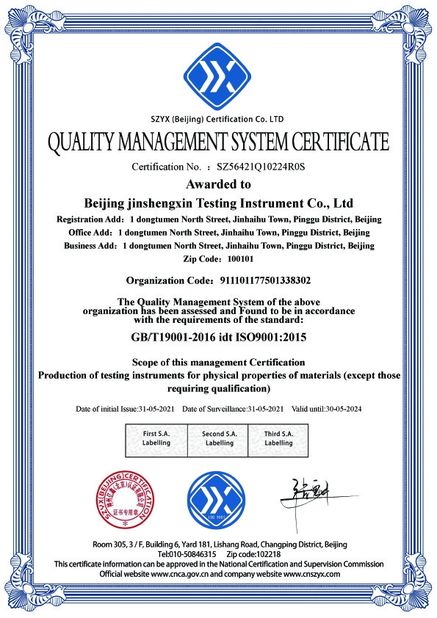
중국 Beijing Jinshengxin Testing Machine Co., Ltd. 인증
전자적 만능시험기기 제품을 위한 당신의 도움에 감사합니다

—— 가브리엘라

그것은 당신과 함께 일하는 즐거움이었고 내가 당신이 가지고 있는 노력이 우리의 회사 사이의 협력을 두었다는 것을 매우 압니다. 나는 2개 회사 사이의 제휴가 더욱 강화되기를 희망합니다. 나는 미래에 당신에게 모든 행운과 성공을 바랍니다.

—— 미스터 Si 토치기요일

제가 지금 온라인 채팅 해요

Durable Differential Scanning Calorimetry Machine for Precise Thermal Measurement of Plastics Polymers and Material Testing

Durable Differential Scanning Calorimetry Machine for Precise Thermal Measurement of Plastics Polymers and Material Testing

큰 이미지 :  Durable Differential Scanning Calorimetry Machine for Precise Thermal Measurement of Plastics Polymers and Material Testing

제품 상세 정보:
원래 장소: 베이징, 중국
브랜드 이름: JINHAIHU
인증: ISO 9001
모델 번호: DSC-600
결제 및 배송 조건:
최소 주문 수량: 1 세트
포장 세부 사항: 표준 수출 나무 상자
배달 시간: 근무일 기준 7일
지불 조건: T/T, L/C, Western Union, MoneyGram, D/A, D/P.
공급 능력: 한 달에 30 세트
상세 제품 설명
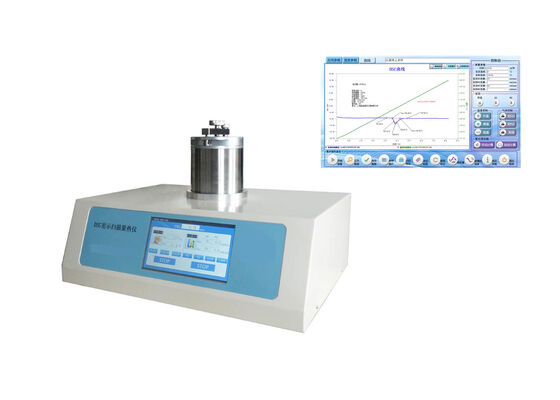
제품명: 플라스틱 폴리머의 정밀한 열 측정과 재료 테스트를 위한 내구성 있는 시차 주사 열량계 기계 모델: DSC-600
자격증: ISO, CE DSC는 이릅니다: 0 m ± 500MW
온도 범위: 실온 ~ 800 00 공기 냉각 가열 속도: 0.1 ~ 80 ℃/분
온도 해상도: 0.1℃ 온도 변동: ± 0.1 ℃
강조하다:

durable differential scanning calorimetry machine

,

precise thermal measurement machine for plastics

,

material testing DSC machine with warranty

Durable Differential Scanning Calorimetry Machine for Precise Thermal Measurement of Plastics Polymers and Material Testing
Instrument Overview

Differential Scanning Calorimetry (DSC) is a classical thermal analysis technique designed to characterize thermal effects of materials under programmed temperature conditions. It is extensively employed across materials science and chemistry sectors—including R&D, process optimization, quality control, and failure analysis—for its high precision and versatility.

DSC enables systematic investigation of key material properties: phase transitions of inorganic materials, melting and crystallization behaviors of polymer materials, polymorphism of pharmaceutical compounds, and the solid-liquid phase ratio of oils and fats.

Instrument Applications

Differential Scanning Calorimetry (DSC) enables precise quantification of heat-associated physical and chemical changes in materials, covering key parameters including:

  • Glass transition temperature (Tg)
  • Melting point and melting temperature
  • Crystallization behavior and crystallization enthalpy
  • Phase transition reaction enthalpy
  • Thermal stability
  • Curing/crosslinking processes
  • Oxidation induction period (OIP)
Reference Standards
  • GB/T 19466.2 - 2004 / ISO 11357-2:1999 Part 2: Determination of glass transition temperature
  • GB/T 19466.3 - 2004 / ISO 11357-3:1999 Part 3: Determination of melting and crystallization temperature and enthalpy
  • GB/T 19466.6 - 2009 / ISO 11357-3:1999 Part 6: Determination of oxidation induction time (isothermal OIT) and oxidation induction temperature (kinetic OIT)
Technical Parameters
Parameter Specification
DSC Range 0~±500mW
Temperature Range Room temperature ~ 800℃ Air cooling
Heating Rate 0.1~80 ℃/min
Temperature Resolution 0.1℃
Temperature Fluctuation ±0.1℃
Temperature Repeatability ±0.1℃
DSC Noise 0.01mW
DSC Resolution 0.01mW
DSC Accuracy 0.01mW
DSC Sensitivity 0.01mW
Temperature Control Mode Heating, constant temperature (full program automatic control)
Curves Scan Heating scan
Atmosphere Control Instrument automatically switches
Display 24bit color 7-inch LCD touch-screen display
Data Interface Standard USB interface
Parameter Standards With a standard substance; a key calibration function; the user can correct the temperature and enthalpy personally
Remark All the technical indicators can be adjusted according to user needs
Frequently Asked Questions
Q1: What is the core working principle of a DSC machine?
The DSC machine operates by measuring the heat flow difference between a sample and an inert reference material as both are subjected to a programmed temperature cycle (heating, cooling, or isothermal). This enables quantitative analysis of heat-associated physicochemical changes in the sample, such as phase transitions, melting, crystallization, and thermal decomposition.
Q2: What key physicochemical properties can a DSC machine test?
It can precisely quantify critical parameters including glass transition temperature (Tg), melting point (Tm), melting enthalpy, crystallization behavior, crystallization enthalpy, phase transition enthalpy, thermal stability, curing/crosslinking degree, and oxidation induction period (OIP).
Q3: What are the typical temperature range and temperature accuracy of a standard DSC machine?
Standard models offer a temperature range of -150 °C to 700 °C (extendable to 1500 °C for high-temperature variants). Temperature accuracy is ±0.1 °C, with temperature resolution up to 0.01 °C—ensuring precise control of the programmed temperature cycle.
Q4: Which materials are compatible with DSC testing?
It is widely applicable to polymers (plastics, rubbers, fibers), inorganic materials, pharmaceuticals, food ingredients, oils and fats, composites, and other materials requiring thermal property analysis—covering R&D, quality control, and failure analysis scenarios.
Q5: Does the DSC machine comply with international testing standards?
Yes, it fully complies with major international standards such as ISO 11357 (polymers), ASTM E967/E968 (general DSC methods), GB/T 19466 (plastics), and USP <891> (pharmaceuticals)—ensuring test results are recognized globally.
Q6: What is the sample requirement for DSC testing, and how is data processed?
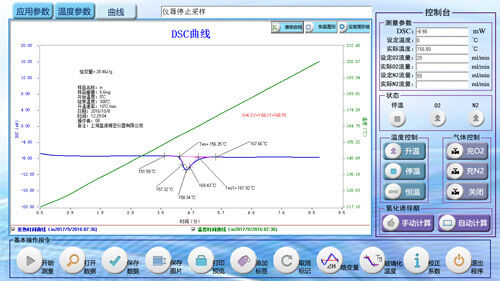
The recommended sample weight ranges from 2-10 mg (depending on material type). The machine is equipped with a high-sensitivity heat flow sensor (sensitivity ≤0.1 μW) and professional analysis software, which automatically records test curves (heat flow vs. temperature/time) and calculates key parameters. Data can be exported in Excel/CSV/PDF formats for further analysis.
Q7: What maintenance is required for the DSC machine, and what is the service life of core components?
Routine maintenance includes annual calibration of temperature and heat flow (using standard reference materials like indium), and regular cleaning of the sample pan. Core components (sensor, heating/cooling module) have a service life of ≥50,000 test cycles. We provide calibration protocols and technical support for maintenance.
Q8: Can the DSC machine be customized for specific testing needs?
Yes, customization options are available, including extended temperature ranges (low-temperature cryogenic modules or high-temperature furnaces), specialized sample pans (hermetic, pressure-resistant), and tailored software functions (e.g., kinetic analysis modules for curing reactions)—adapting to unique application scenarios.
Product Images

연락처 세부 사항
Beijing Jinshengxin Testing Machine Co., Ltd.

담당자: Ms. Zoe Bao

전화 번호: +86-13311261667

팩스: 86-10-69991663

회사에 직접 문의 보내기 (0 / 3000)